You Paid for the Photos. But Do You Own Them?
Years ago, when I worked for a landscape company, we received a pretty pointed letter about some photographs being used on our website.
The images weren't ours.
The web designer at the time had pulled stock photos from the internet and used them to fill out the site. Looking back it seems obvious that you cannot just find an image online, download it, and use it for your business. At the time though none of us gave it much thought and the designer did it without asking.
The letter made us give it some thought pretty quickly.
It also pushed us to do something we should have been doing all along: create our own photography and start showing our actual work instead of filling the website with imagery that belonged to someone else.
Problem solved, right?
Mostly. But there was another layer to copyright that I didn't fully understand until later.
Even when you hire a photographer and pay them to create photographs for your business, you don't necessarily own the copyright to those photographs.
Paying for Photography and Owning the Copyright Are Two Different Things
Under U.S. copyright law, the photographer who creates an image generally owns the copyright to that image unless those rights have been specifically transferred or another arrangement has been agreed upon.
What a commercial photography client typically receives is a license to use the photographs.
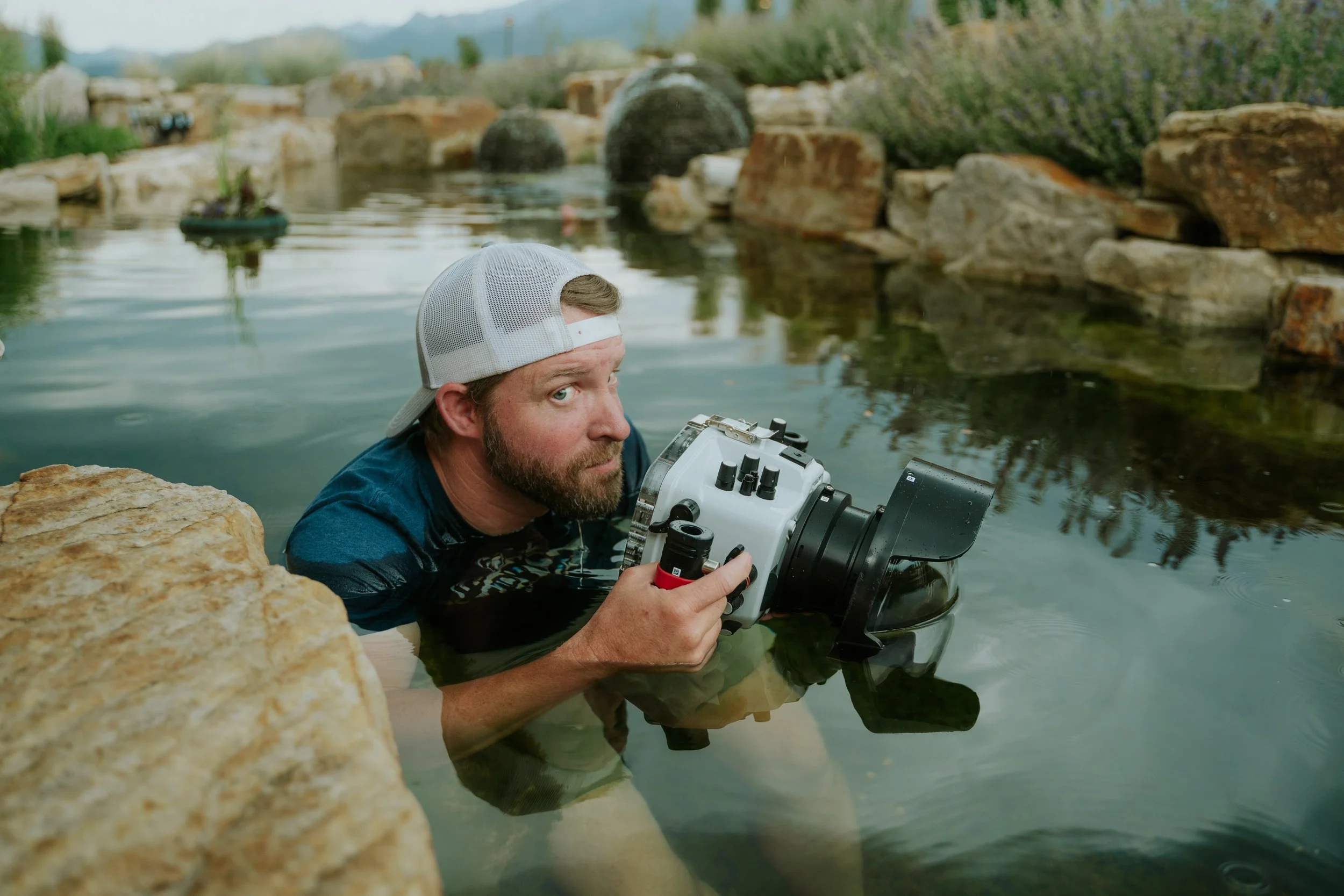
When you give an image to another company without permission, you're making the decision to give away something of value on the photographer's behalf.
The terms of that license can vary. It might allow a company to use images on its website, social media, advertising, sales materials, award submissions, or other marketing channels. That gives the company meaningful rights.
It does not necessarily give the company the right to hand those photographs to someone else for their own use.
Think About an App on Your Phone
Here is another way to think about it.
You download an app and pay for it. You have the right to use it according to the terms of that purchase. But did you buy the intellectual property behind it? No. Can you start selling copies to other companies? No. Can you give the software to another business because you think they could use it? Not without permission.
What you purchased was the ability to use that product according to a license.
Professional photography works the same way.
When you hire a photographer you are paying for their time, experience, equipment, editing, and finished images. You are also receiving permission to use those photographs according to agreed upon terms. That is different from purchasing the underlying copyright.
Where This Gets Complicated in the Landscape Industry
This is where things get genuinely tricky, because several companies often contribute to the same finished project.
Say a landscape contractor hires me to photograph a residential property. The contractor uses the images on their website and social media. Then the landscape architect wants them. The pool contractor wants them. The masonry supplier sees its product in the photos and wants to use them in an advertisement. The lighting manufacturer wants a few for their marketing materials. Another contractor wants one for a certification application.

In the case of this image, the landscaper, paver company, mason and fire pit burner manufacturer may want to license the same image, but permission for use has to come from the photographer, not the hiring business.
Everyone involved may have a completely legitimate reason for wanting those photographs.
That does not mean everyone automatically has permission to use them.
The contractor who originally hired the photographer may have the right to use the images for their own business. That does not give them the right to extend that permission to another company.
Why Does This Actually Matter
Context matters quite a bit here.
If you download one of the photographs and text it to your family because you are proud of the project, most photographers are not going to lose sleep over it. You are sharing the work you did.
But if that same photograph ends up on another company's website, in a certification application, in advertising, or anywhere else that helps advance their business, that is a very different situation.
The photograph is now doing commercial work for someone else. It is helping another company demonstrate its capabilities, establish credibility, and potentially generate revenue.
That photograph has real value. And the person who created it should have the opportunity to decide whether that use is appropriate.
It's Just a Photo…amiright?
A digital photograph is easy to copy and costs essentially nothing to send. That can make it feel like there is not much being given away.
But the file is not where all the value lives.
A professional photographer invests in cameras, lenses, computers, software, insurance, travel, education, and years of experience to create those images. More importantly, the ability to license those images is part of how that photographer supports their business.
When a photograph gets handed to another company without permission, something of value has effectively been given away on the photographer's behalf. Maybe that company would have reached out and licensed the image. Maybe they would have hired the photographer directly. Maybe the photographer would have approved the use at no charge.
The point is that it should be the photographer's decision to make. When someone else makes it for them, that choice has been taken away from the person who did the work.
Most of the Time Nobody Is Trying to Steal Anything
This is worth saying clearly.
Most unauthorized image sharing is not malicious. Someone asks if you have a photo they can use. You have a great one. You want to help. So you send it.
I understand why that happens. Years ago I might have done the same thing.
But good intentions do not create the right to give someone else's work away. If I purchased access to a training course, I could not take the instructor's materials and hand them to another company simply because I wanted to help. The fact that a file is easy to copy does not eliminate the value of what went into creating it.
Photography is no different.
When in Doubt, Ask
None of this has to be complicated.
If another contractor, designer, supplier, manufacturer, or industry partner wants to use photographs that were created for your company, ask the photographer before sending them. Sometimes the use is already covered. Sometimes the other company simply needs its own license. Sometimes the photographer is perfectly happy to approve a particular use at no charge.
The important thing is letting the person who owns the work make that decision.
As photographers we also have a responsibility to communicate these things clearly upfront so clients are never left guessing about what they can and cannot do with their images.
Here is the simplest way to think about it: use the images according to the rights your photographer gave you. If someone else wants to use those images to further their business, do not make that decision for the photographer. Ask first.
It takes a minute. It respects another professional's work. And it prevents an innocent misunderstanding from becoming a much bigger problem later.
This article provides general information about photography licensing and copyright and is not legal advice.